Most furnaces get exactly zero attention from April to October. Then the first cold night rolls into Westminster, someone bumps the thermostat setting up a few degrees, and the whole house quietly listens for that familiar whoosh from the basement.
Usually it comes. Sometimes it comes with a smell like burnt dust, or a few more clicks than usual before the burners catch, or a rattle you’re pretty sure wasn’t there last spring. The furnace still turns on, so it’s easy to shrug and move on. Still, a furnace that runs and a furnace that runs well can look identical in October. You tend to find out which one you have in January, at night, on a weekend.
Furnace maintenance is how you get that answer before the heating season begins. Below, we’ll walk through what a professional furnace tune up actually involves, how often to schedule one, how long it takes, what drives furnace tune up cost, and the warning signs that shouldn’t wait for your annual visit.
Key Takeaways
- A furnace tune up is a hands-on visit that inspects, cleans, and tests safety controls, combustion, airflow, electrical connections, and drainage.
- Efficient Comfort’s furnace maintenance checklist includes carbon monoxide testing, a heat exchanger inspection, flame sensor and igniter checks, temperature rise readings, and a filter replacement.
- Once a year is the sweet spot for most homes, and early fall is the easiest time to get on the calendar.
- Plan on about one to two hours, a little longer for older furnaces or tight installations.
- Cost depends on the furnace and how thorough the visit is. The Efficient Comfort Club makes annual service easier to budget for.
- Changing furnace filters regularly and keeping vents clear are great homeowner jobs. Gas systems and wiring are not.
- Regular maintenance can help reduce the risk of unexpected breakdowns and costly repairs, and it gives you better information if a repair-or-replace decision ever comes up.
What Is a Furnace Tune Up?
Think of it as the furnace version of an oil change. Your car will run for a while without one. Eventually the skipped maintenance catches up with you, usually at a bad moment and with a bigger bill attached.
A furnace tune up is a scheduled visit where a technician inspects, tests, and cleans your heating system so it runs safely and holds onto its system efficiency all winter. Depending on who’s talking, you might hear professional furnace maintenance called a tune up, an inspection, or a furnace maintenance service. A good visit is all three at once.
The inspection side checks key components you can’t see from the basement stairs. A flue pipe starting to corrode. A capacitor getting weak. Loose electrical connections. A flame sensor wearing a thin coat of residue. The tune up side is the cleaning and fine adjustment that helps the furnace light on the first try and move air the way it was built to.
Repairs start after something goes wrong. Furnace preventative maintenance gets there first, while the fix is still small and well before anyone is calling around for emergency repairs.
What Does a Furnace Tune Up Include?
Ask five companies and you might get five different answers. Some visits amount to a filter swap and a friendly wave. Ours follow a detailed furnace maintenance checklist covering seven parts of the system, and here’s what that looks like from the technician’s side of the cabinet.
Safety and Operation Inspection
We start here every time. A natural gas furnace burns fuel inside your house, so job one is making sure combustion gases stay contained and leave the way they should.
- Inspect accessible sections of the heat exchanger for cracks, corrosion, or deterioration
- Check burner flames for proper ignition and appearance
- Inspect the gas valve, fittings, and accessible connections
- Test safety controls and limit switches
- Inspect the vent connector and flue pipe for damage, blockage, corrosion, and proper slope
- Check combustion air supply and vent termination
- Test carbon monoxide levels in the surrounding air
- Confirm furnace doors and safety interlocks work as designed
- Pull stored fault codes and diagnostic history
That last one is a quiet favorite of ours. Plenty of modern furnaces keep a log of their own hiccups, including the ones that sorted themselves out before anyone noticed. Five pressure switch faults since March tell a story the homeowner never heard.
Burner and Combustion System
If your furnace clicks, tries, clicks again, or lights and quits a few seconds later, the culprit usually lives somewhere in here.
- Inspect the combustion blower, safety pressure switches, and hoses
- Inspect the burners and the hot surface igniter or spark ignition system
- Measure igniter resistance or verify operation per manufacturer specifications
- Watch the full ignition sequence and burner shutdown
- Inspect the pilot assembly on older furnaces that still have one
- Test the flame sensor and flame-proving sequence
- Inspect accessible heat exchanger surfaces and seams, plus the secondary heat exchanger on high-efficiency models when we can reach it
- Look for corrosion, condensate damage, restricted passages, and flame rollout or disturbance
- Run combustion analysis with a calibrated analyzer when appropriate
Blower and Airflow
Heat doesn’t do you much good if it never makes it to the bedrooms. A furnace can produce plenty of it and still leave the upstairs chilly when air isn’t moving well. Restricted airflow also makes the furnace run hotter, run longer, and burn more fuel trying to keep up.
- Inspect the blower wheel for buildup and damage
- Check the blower motor, its mounting, and the capacitor
- Measure blower motor amperage against the nameplate rating
- Inspect the air filter and look for gaps around the filter rack
- Look over accessible supply and return ductwork
- Confirm blower speed and airflow settings
- Measure temperature rise across the furnace and compare it with the rating plate
Temperature rise is one of the most telling readings we take. We compare the air going into the furnace with the air coming out, then check it against the range printed on the unit. Too high usually points to an airflow problem. Too low can mean the burners aren’t firing the way they should. Either way, a hunch becomes a number we can act on.
Electrical System
Loose wires and tired relays rarely give much warning. They just quit one cold morning.
- Inspect wiring for damage, overheating, or loose electrical connections
- Check the control board for burned or damaged components
- Check thermostat wiring and low-voltage connections
- Test the transformer for proper output voltage
- Check the blower relay and other controls
Condensate System for High-Efficiency Furnaces
High-efficiency furnaces wring so much heat out of combustion that they actually make water. That water needs a clear path out. If it backs up, a safety switch shuts the furnace down, which is great news for your floor and less great news for your evening.
- Inspect the condensate trap, drain tubing, and condensate pump if you have one
- Test the overflow safety switch where applicable
- Inspect PVC intake and exhaust piping and terminations
- Look for leaks or signs of poor drainage
Around here, those white PVC pipes on the side of the house deserve a second look. A good Front Range snowstorm can drift right over an intake or exhaust terminal, and a blocked vent is one of the more common reasons a high-efficiency furnace gives up mid-storm.
Thermostat and Operating Cycle
We make sure the thermostat setting and the furnace are actually communicating from start to finish. When they aren’t, you get strange symptoms like uneven heating, frequent cycling, or a house that never quite settles on the temperature you picked.
The Tune Up Itself
With the inspection wrapped up, it’s time to get our hands dirty:
- Resurface spark electrodes
- Clear pressure taps
- Resurface the flame sensor (flame rectifier)
- Clean the burner compartment
- Replace a standard size air filter
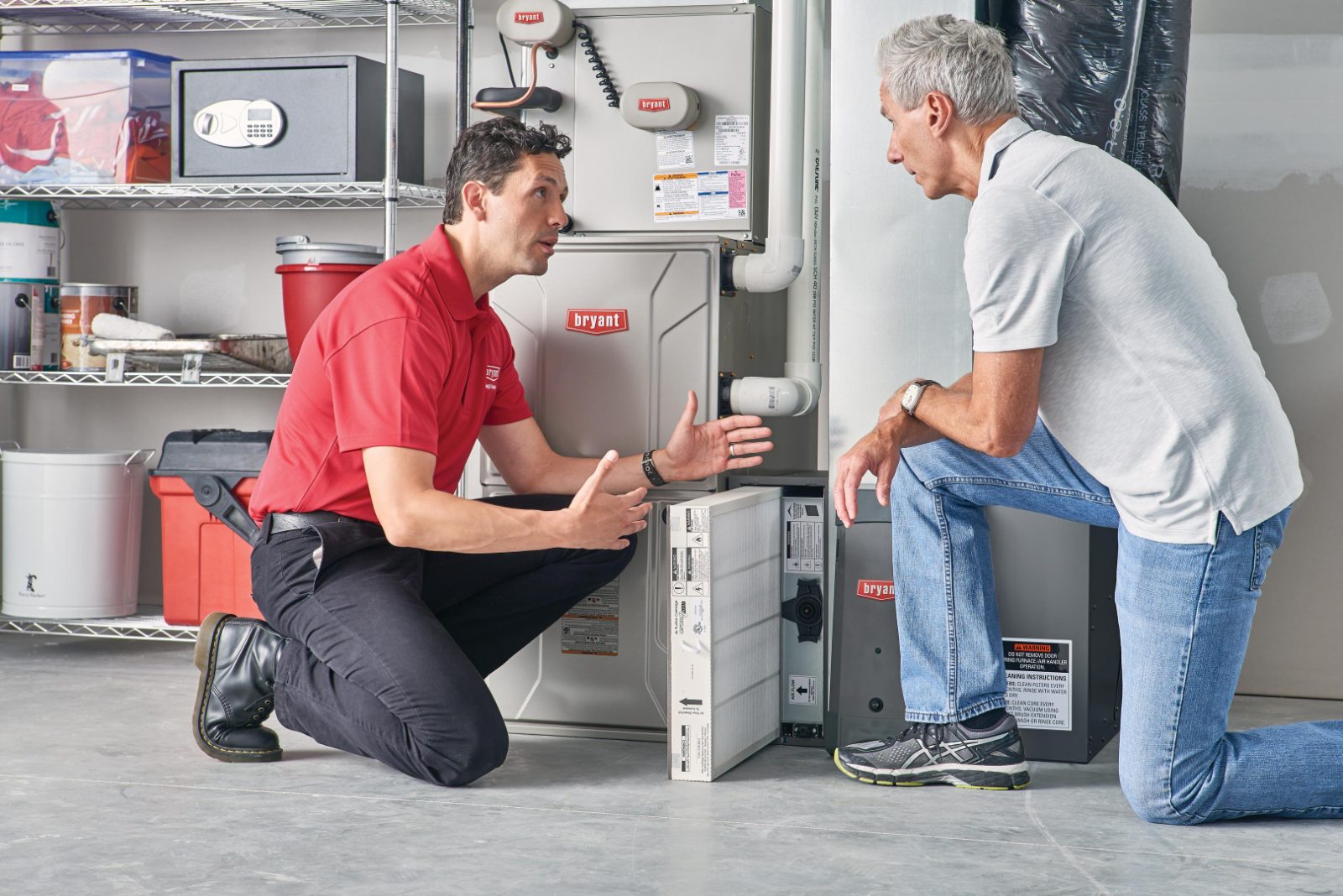
Before we pack up, you’ll hear plainly whether the furnace’s components are functioning correctly. If something needs repair, we’ll show you what we found, explain why it matters, and lay out your options. Nothing extra happens without your okay.
Why Furnace Maintenance Is Important for Colorado Homes
Front Range winters love a plot twist. A furnace in Arvada might coast through a mild week in November, then run almost nonstop when an arctic front shows up overnight. Those swings are hard on igniters, blower motors, and capacitors, and worn parts have a knack for failing on exactly the nights you need them.
Then there’s the dust. Colorado air is dry, and dry homes send a surprising amount of it into filters, blower wheels, and flame sensors. A dusty flame sensor is behind a lot of “it starts, then shuts right off” calls. That same dust loops back through every room, so a dirty filter affects indoor air quality as much as it affects heat.
Here’s what furnace preventative maintenance can do for you:
- Safety: Carbon monoxide testing, a heat exchanger inspection, and venting checks help confirm the system operates safely and that combustion gases are heading outside where they belong.
- Reliability: Catching a worn igniter or weak capacitor in September can help prevent unexpected breakdowns in December.
- Efficiency: Clean burners, healthy airflow, and correct temperature rise can help improve energy efficiency and overall system performance, which may help lower energy costs over time.
- Indoor air quality: A fresh air filter and a clean blower help keep dust and debris out of circulation.
- Equipment life: Furnaces that run within their design limits generally wear more slowly.
- Warranty terms: Some manufacturers expect documented annual maintenance to keep coverage in place, so it’s worth a quick look at your paperwork.
No tune up can promise a furnace will never break. What it does is swap guesswork for real information, and that’s a much better place to start winter from.
How Often to Tune Up a Furnace
Once a year covers most homes. We like late summer and early fall, partly because you get answers before the first cold snap and partly because scheduling service is a lot easier before everyone else remembers they own a furnace.
A few situations call for a closer eye:
- The furnace is 15 years old or older
- You’ve got pets, a recent remodel, or anyone in the house with allergies
- Last winter brought repairs or repeated shutdowns
- You just moved in and have no idea when it was last serviced
- Your furnace shares the load with a heat pump in a dual fuel setup
If you have central air too, pairing a fall furnace visit with spring A/C maintenance keeps the whole HVAC system on a predictable rhythm.
How Long Does a Furnace Tune Up Take?
Plan on about one to two hours. A newer furnace sitting in an open basement tends to go quickly. An older unit, a high-efficiency model with a condensate system to check, or a furnace wedged into a tight closet or crawlspace will take longer.
If we find a problem, we’ll take the time to diagnose it properly. You’re welcome to hover and ask questions, or go about your day. Just try to be around at the end so we can show you what we found.
Furnace Tune Up Cost and Furnace Maintenance Cost
Here’s the honest answer: furnace tune up cost depends a lot on what you’re actually getting. A rock-bottom price sometimes buys a quick peek and a new filter. A real professional inspection with combustion analysis, carbon monoxide testing, electrical readings, and condensate checks takes more time and a trained eye, and the price reflects that. It’s also the kind of visit that finds a failing part in October, while it’s still a scheduled fix instead of a costly repair in January.
The main things that move furnace maintenance cost:
- Furnace type, such as standard efficiency or high-efficiency condensing
- Age and overall condition
- How easy the furnace is to reach
- Any parts or repairs needed beyond routine maintenance
- Whether the visit is part of a maintenance plan
Comparing one service provider to another? Ask to see the checklist. Two visits with the same name on the invoice can involve very different work. Efficient Comfort uses upfront pricing, so you’ll know the cost before we start, and any recommended repair comes with its price before anything moves forward.
If you’d rather not think about it at all, the Efficient Comfort Club folds annual service into a plan that’s easier to budget for.
What Homeowners Can Safely Handle Between Visits
You don’t need a toolbox to give your furnace a hand. A few low-effort habits make a real difference:
- Check furnace filters regularly. A monthly glance during heating season is plenty. If the air filter looks gray and fuzzy, it’s time. Standard 1-inch filters usually last one to three months, and thicker media filters last longer.
- Let the vents breathe. A couch parked over a return or a rug covering a floor register can cause weak airflow in that room and strain the whole system.
- Shovel out the PVC vents. After a big snow, check the intake and exhaust pipes on a high-efficiency furnace.
- Keep the area around the furnace clear. Paint cans, holiday boxes, and laundry piles should live somewhere else.
- Check the humidifier pad. If you have a whole-home humidifier, dry Colorado air keeps it busy. Replace a crusty or worn pad on the schedule the manufacturer recommends.
- Test your carbon monoxide detectors. Fresh batteries on schedule, and new detectors when the manufacturer says so.
- Trust your nose and ears. Unusual noises and unusual smells are often the first clue something has changed.
Everything behind the furnace panel is a different story. The gas valve, burners, igniter, control board, wiring, and other internal components involve gas, high voltage, and combustion, so leave those to a professional furnace technician.
Warning Signs That Shouldn’t Wait for Your Next Tune Up
Some issues can ride until your annual visit. These can’t. Call for furnace repair if you notice:
- Clicking, repeated ignition attempts, or a furnace that lights and shuts off
- The furnace turns on but blows cool air
- Uneven heating, with some rooms chilly and others stuffy
- Frequent cycling, where the furnace kicks on and off every few minutes
- Weak airflow at the vents, even with a fresh filter
- Banging, squealing, grinding, or rattling
- A yellow, lazy, or flickering burner flame instead of a crisp blue one, which can point to combustion or gas pressure problems
- Water around the base of a high-efficiency furnace
- Rising energy bills when the weather and your habits haven’t changed
- A burning electrical smell that hangs around after the first few cycles
One more, and it’s the most important. If you smell gas, suspect a gas leak, or hear your carbon monoxide alarm, get everyone outside and call your gas utility or 911 from there. Once the home is safe, call us. Efficient Comfort offers emergency HVAC repair and will get to you as quickly as we can during our operating hours.
When a Tune Up Turns Into a Bigger Conversation
Most visits end with a clean report or a quick fix. Every so often, the inspection turns up something larger: a cracked heat exchanger, an inducer motor on its way out, or a 20-year-old furnace that’s needed a little more help each winter.
That’s when a good technician slows down. The right recommendation depends on the home, the equipment, and the comfort problem you’re actually trying to solve. We look at the furnace’s age, its repair history, how the furnace’s performance has changed over time, what the repair costs compared with what the equipment is worth, and whether the system was sized correctly for the house in the first place. Sometimes the furnace really is worn out. Other times the ductwork is the reason that back bedroom never warms up, and a new furnace wouldn’t change a thing.
If repair makes sense, we’ll tell you. We repair and service all makes and models, so the name on your furnace doesn’t matter for maintenance or repairs. If replacement starts to make more sense, we’ll explain why in plain terms and give you room to think it over. As a Bryant Factory Authorized Dealer, Efficient Comfort proudly installs Bryant equipment, including furnaces and heat pumps matched to your home. Financing is available on qualifying repairs and replacements.
Take It Off Your To-Do List With the Efficient Comfort Club
The hardest part of annual furnace maintenance is remembering it. Life gets busy, September vanishes, and suddenly there’s snow on the patio furniture. The Efficient Comfort Club handles the remembering for you with regular professional maintenance visits for your heating and cooling equipment.
Each visit is another chance to catch worn parts, dirty filters, airflow issues, and early performance problems before they grow into larger repairs. Over a few years, it also builds a real service history for your system, so if a big decision ever comes up, you’re making it with facts instead of guesses. Members are already on the schedule, too, so there’s no scrambling for an opening once the heating season hits full swing.
Why Westminster Homeowners Call Efficient Comfort
We’re a family-owned company based right here in Westminster, CO, and we’ve been taking care of local homes since 2007. Most of our days are spent in Westminster, Arvada, Broomfield, Boulder, Golden, Longmont, Erie, and the neighborhoods in between across the northwest Denver metro area.
- Family owned, locally run: No franchise playbook and no private-equity owners. Decisions get made by people who live here too.
- A real person on the phone: Call us and you’ll reach our team, not a phone tree.
- More than 1,200 5-star Google reviews: Earned one neighbor at a time over nearly two decades.
- Upfront pricing: You’ll see the price before any work starts.
- Bryant Factory Authorized Dealer: Efficient Comfort installs Bryant systems and repairs and maintains all makes and models.
- Straight talk, no pressure: Good professional service should leave you knowing more about your furnace than you did that morning.
Schedule Your Furnace Tune Up in Westminster and Nearby Communities
If the furnace hasn’t been looked at since last winter, consider this your friendly nudge. We’ll run through the full checklist, clean what needs cleaning, and give you a straight answer on whether you can count on reliable heating this winter.
Searching for furnace maintenance near me from Westminster, Arvada, Broomfield, or anywhere along the Front Range? Give Efficient Comfort a call, and a real person from our team will help you find a time that works.
Furnace Maintenance FAQs
What does a furnace tune up include?
At Efficient Comfort, it covers safety and combustion checks, blower and airflow testing, an electrical inspection, condensate drainage on high-efficiency models, and thermostat operation. The visit also includes carbon monoxide testing, flame sensor and electrode resurfacing, a burner compartment cleaning, and a standard size air filter replacement.
How often should I tune up my furnace?
For most homes, annual professional furnace maintenance is the way to go. It helps keep the furnace close to optimal performance, and booking in late summer or early fall means any fixes happen before Westminster’s first real cold snap.
How long does a furnace tune up take?
Usually one to two hours. Older furnaces, high-efficiency systems, tight installations, or a visit that turns up a problem can stretch that a bit.
How much does a furnace tune up cost?
It depends on your furnace, its condition, and how thorough the visit is. We give upfront pricing before any work starts, and the Efficient Comfort Club can make regular furnace maintenance easier to plan for.
Is furnace preventative maintenance worth it?
For most homeowners, yes. Regular furnace tune ups can help reduce the risk of surprise breakdowns, can play a role in improving efficiency, and put a technician’s eyes on safety items like the heat exchanger and venting. A furnace that’s quietly struggling can also lead to higher energy bills long before it actually quits.
Do you service all furnace brands?
Yes. We repair and service all makes and models of furnaces. If replacement ever comes up, Efficient Comfort installs Bryant systems as a Bryant Factory Authorized Dealer.
How do I find a furnace tune up near me in Westminster, CO?
You’re in the right place. Efficient Comfort is based in Westminster and handles furnace tune ups throughout Arvada, Broomfield, Boulder, Golden, Longmont, Erie, and nearby communities. Call our team or schedule online.
Can I do my own furnace maintenance?
Some of it. Changing filters, keeping vents open, clearing snow off outdoor vent pipes, and testing carbon monoxide detectors are all fair game. Anything involving gas, burners, combustion, or wiring belongs with a qualified technician.