
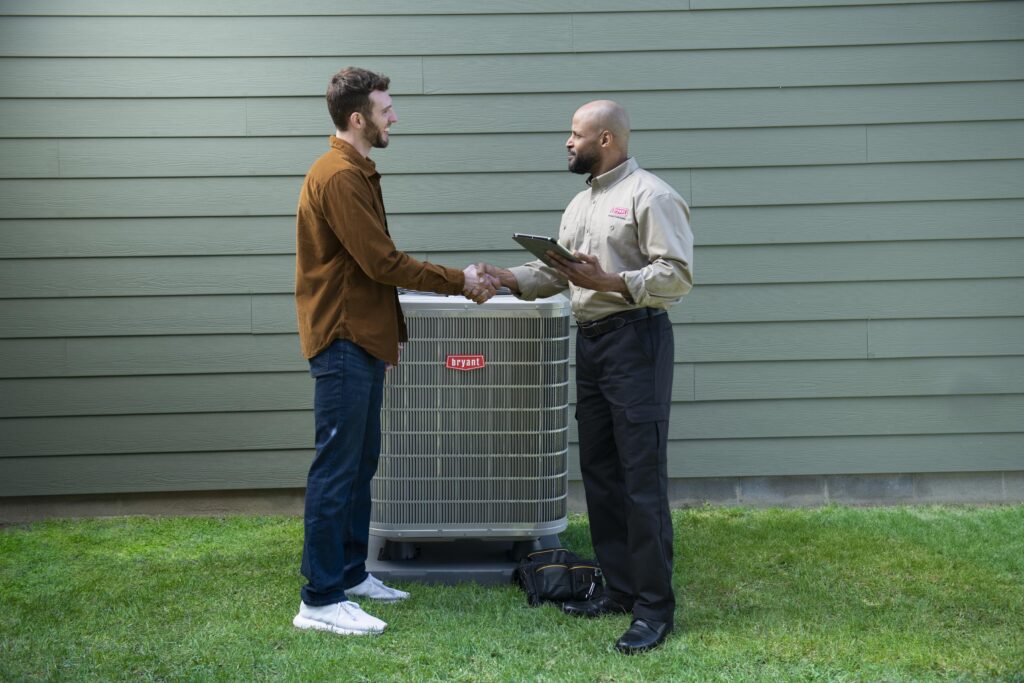
Maybe the AC unit is still running, but it takes longer to cool the house than it used to. Maybe the upstairs bedrooms never quite catch up on the first hot afternoon of the year. Or maybe a technician already mentioned that a full system replacement might be worth discussing, and now the real question is simple: how much is a new AC unit actually going to cost?
It is a fair question, and one without a single answer. Costs depend on the size of the home, the type of system selected, the condition of the existing ducts, and what the installation itself requires. This guide walks through what drives AC unit costs, what a Bryant Factory Authorized Dealer installation looks like, and how Westminster and Denver metro homeowners can get a clearer, more accurate final cost for their specific home.
Key Takeaways
- AC costs vary widely based on home size, system type, energy efficiency ratings, and installation complexity.
- National average price ranges for a central air conditioning system can span from a few thousand dollars to well over ten thousand, so the only reliable number comes from an in-home load calculation.
- Efficient Comfort installs Bryant systems and repairs and maintains all makes and models.
- Higher SEER2 ratings and variable speed technology tend to carry a higher upfront cost but may help lower long term operating costs.
- Correct system size and proper airflow matter as much as the equipment itself.
- Financing options may be available for qualifying replacements, and a written estimate should always come before any installation decision.
What Drives the Cost of a New AC
There is no single price tag for a new air conditioner because no two homes are asking the same central AC system to do the same job. A few factors tend to move the total cost more than others.
Home size and cooling capacity. A larger home, or one with high ceilings and a lot of west-facing glass, needs a system with enough cooling capacity to keep up. This is determined through a load calculation, not a guess. Undersized equipment runs constantly and still cannot keep the home comfortable. Oversized equipment cycles too fast, which wastes energy and leaves rooms feeling uneven.
System type and energy efficiency ratings. Central air conditioners are available as single stage, two-stage, and variable speed systems. Single-stage units operate fully on or off, while variable speed compressors adjust output in smaller increments, which can improve system efficiency and offer better humidity control. Higher SEER2 ratings, generally 16 or above for high efficiency units, tend to consume less energy, though a higher SEER2 rating usually comes with a higher upfront cost. Many current systems carry a minimum efficiency rating around 13.4 SEER2, and the right system type depends on the home’s cooling needs and budget.
Existing ductwork. If the existing ducts are undersized, leaky, or were never quite right for the home, that gets factored into the installation. Ductwork modifications to ensure proper airflow can add to the project, but skipping this step often means the new system never performs the way it should.
Installation complexity and labor costs. Attic access, electrical panel capacity, condensing unit placement, and whether the indoor evaporator coil, air handler, and blower motor need to be replaced alongside the outdoor unit all factor into labor costs. Local labor rates and home accessibility both play a role in the final cost, and installation complexity is one of the biggest reasons two homes with similar equipment can see different quotes.
How Our Technicians Approach an AC Replacement Estimate
A good estimate should feel like a conversation, not a sales pitch. Before recommending a specific system type or price, our technicians walk through the home and evaluate several things at once.
We look at the age and condition of the current AC system, the existing ducts it relies on, insulation and window exposure, and the specific rooms where comfort has been inconsistent. We also ask about the symptoms that led to the call. A system that is short cycling, running constantly, or struggling to keep certain rooms cool tells us something different than a unit that has simply reached the end of its expected lifespan.
From there, we run the load calculation, walk through system types and energy efficiency ratings that fit the home, and provide a written estimate before any work begins. Many HVAC companies quote a single number without explaining what is behind it. We would rather walk through what drives the cost, so nothing feels like an add-on pushed at the last minute. If repair is still a reasonable option, we will say so. If a full system replacement becomes part of the conversation, we will explain why clearly, including what is driving the recommendation.
We also understand homeowners often want to compare multiple estimates before deciding, and we support that. Flexible scheduling for both the estimate visit and the installation itself helps make the process easier to plan around.
Repair or Replace? A Few Questions Worth Asking
Not every aging AC needs a full system replacement right away. A few questions can help frame the decision before cost even enters the conversation.
- Is the system more than 12 to 15 years old and needing HVAC repair more often than it used to?
- Has a technician mentioned that the refrigerant type used in the system is being phased out or is increasingly expensive to source?
- Are cooling bills climbing even though usage habits have not changed?
- Does the home have rooms that never cool evenly, no matter how the thermostat is adjusted?
- Has the system needed more than one significant HVAC repair in the past year or two?
None of these questions have a yes or no answer that automatically means replacement. They are simply the starting point for a repair-versus-replacement conversation with a technician who can look at the actual equipment and home.
System Types and Technology Worth Understanding
Homeowners comparing a new HVAC system often come across terms that are not always explained clearly.
Split systems pair an outdoor unit with an indoor unit, typically connected through the home’s existing ducts. This is the most common central air conditioning setup for homes already built around ducted heating and cooling.
Single-stage versus variable speed. A single-stage central AC runs at full capacity whenever it is on, then shuts off once the home reaches the set temperature. Variable speed technology, by contrast, can run at many different output levels, sometimes around 60 speed settings, which allows the system to match cooling output to what the home actually needs at that moment. This advanced technology can mean quieter operation, more consistent temperatures, and better humidity control, though it typically comes with a higher upfront cost than a single-stage system.
Heat pumps. For homeowners considering a new HVAC system, settling for a like-for-like AC replacement might mean missing out on the incredible benefits of a modern heat pump. Acting as both a high-performance air conditioner and a powerful heater in one, these systems are specifically built to handle Colorado’s unique climate.
Because they use electricity to transfer heat rather than burning fuel to generate it, heat pumps are the most energy-efficient option on the market today, resulting in major long-term utility savings. While a broader HVAC upgrade might sound like a larger investment, generous rebates from local utility companies and exclusive incentives from the State of Colorado are available to drastically offset the initial cost.
Before committing to a standard AC swap, it is absolutely worth discussing a heat pump during your load calculation to see how affordable year-round, premium comfort can be. Our technicians can walk through which system type fits the home, the budget, and the comfort goals, without steering the conversation toward the most expensive option by default.
Bryant Installation and What It Means for Your Home
As a Bryant Factory Authorized Dealer, Efficient Comfort proudly installs Bryant equipment for homeowners throughout Westminster and the surrounding Denver metro area. Bryant systems span a range of energy efficiency ratings and system types, from single-stage central air conditioners to high efficiency systems with variable speed compressors, which allows installations to be sized and specified around the actual needs of the home rather than a one-size-fits-all approach.
Bryant’s Evolution series has been highlighted for its advanced engineering and performance, showcasing their dedication to delivery reliable and efficient HVAC solutions. Year-after-Year, Bryant continues to be recognized as a leading name in the HVAC industry, with a strong focus on customer satisfaction and product excellence.
Efficient Comfort installs Bryant systems and repairs and maintains all makes and models, so if the current air conditioning unit is a different brand, that does not change how a repair or maintenance visit is handled. If replacement is needed, Efficient Comfort installs Bryant systems, and our technicians will walk through equipment options, warranty coverage, and installation timelines specific to the home.
AC Replacement for Westminster and Denver Metro Homes
Colorado’s climate puts its own demands on cooling equipment. Hot, dry afternoons paired with cool evenings and rapid temperature swings mean a correctly sized system matters more here than it might in a more consistent climate. An oversized outdoor unit that might get away with inefficiency elsewhere will short cycle noticeably in a Front Range summer.
Our day-to-day work is rooted in Westminster, Arvada, Broomfield, Boulder, Golden, Longmont, and Erie. Denver is part of the broader service area, but much of our residential AC installation work is focused northwest of Denver, in the neighborhoods and home styles we know well from years of local installations.
Why Homeowners Choose Efficient Comfort for AC Replacement
Efficient Comfort has been family-owned and Westminster-based since 2007, with thousands of heating and cooling systems installed across the Denver metro area. A few things set the experience apart:
- Real people answer the phone, not a call center script.
- Upfront, written pricing before any installation work begins, so there are no surprise additional costs.
- Bryant Factory Authorized Dealer status, with Bryant systems installed and all makes and models repaired and maintained.
- More than 1,000 five-star Google reviews from local homeowners.
- 24/7 emergency HVAC service when something cannot wait.
- Financing options available for qualifying replacements.
Keeping a New System Running Efficiently
A new AC system is a significant investment, and routine maintenance gives your system a better chance to operate efficiently for years to come. Our Efficient Comfort Club includes seasonal maintenance visits where technicians inspect refrigerant levels, electrical connections, the indoor evaporator coil, the blower motor, filters, and thermostat operation.
Keeping the blower motor and coils clean helps ensure proper airflow, which supports both comfort and system efficiency. Catching a worn part or airflow issue early can help reduce the risk of a surprise breakdown, and can also help keep energy usage, and in turn energy bills, more predictable over the life of the system. While we cannot promise a specific number on utility bills, many homeowners find that a well-maintained, correctly sized system tends to run more predictably than one that was never quite right for the home.
Get a Clear AC Replacement Estimate
If you are trying to figure out how much a new AC unit will cost for your specific home, the most accurate next step is an in-home evaluation. Our technicians will walk through the AC system, the existing ducts, and the comfort issues you have noticed, then provide a written estimate with no pressure to decide on the spot.
Schedule an AC replacement consultation with Efficient Comfort today and get pricing built around your actual home, not a national average.
FAQs
How much does a new AC unit cost?
The actual cost depends on the size of the home, the equipment selected, and the condition of the existing ductwork. The most accurate number comes from an in-home evaluation and a written estimate from a technician who has seen the equipment and ductwork firsthand.
How much does AC installation cost in Denver?
The final number here depends on the size of the home, the condition of the ductwork, and the system type selected. An in-home evaluation is the most reliable way to get an accurate number for your specific home.
Do you install all makes and models?
Efficient Comfort installs Bryant systems and repairs and maintains all makes and models. If replacement is needed, we will walk you through Bryant equipment options that fit your home and budget.
Should I repair or replace my AC?
The right answer depends on the age of the system, how often it has needed HVAC repair, and whether the home has ongoing comfort issues like uneven cooling. A good technician should explain when repair still makes sense and when a full system replacement is worth discussing, based on what they find during the inspection.
What is the difference between single-stage and variable speed AC systems?
A single-stage central AC runs at full capacity until the home reaches the set temperature, then shuts off. Variable speed technology adjusts output across many levels, which can offer more consistent temperatures and better humidity control, typically at a higher upfront cost.
Do you provide AC replacement in Westminster, CO?
Yes. Efficient Comfort provides AC replacement in Westminster, CO along with service throughout Arvada, Broomfield, Boulder, Golden, Longmont, Erie, and the surrounding Denver metro area.
Can a new AC unit help lower energy bills?
Higher efficiency equipment may help reduce energy usage compared to an older system, though actual results depend on the home’s insulation, ductwork, and usage habits. A technician can help set realistic expectations based on your specific home.
Is financing available for AC replacement?
Financing options may be available for qualifying replacements. Our team can go over available options during your in-home consultation.